

cranstudies.com
Share
Get in touch

Colin Bowyer

Danielle Jones

Cognitive neuroscientist interested in identifying systematic measurement error in self-report and neurobehavioral methods.
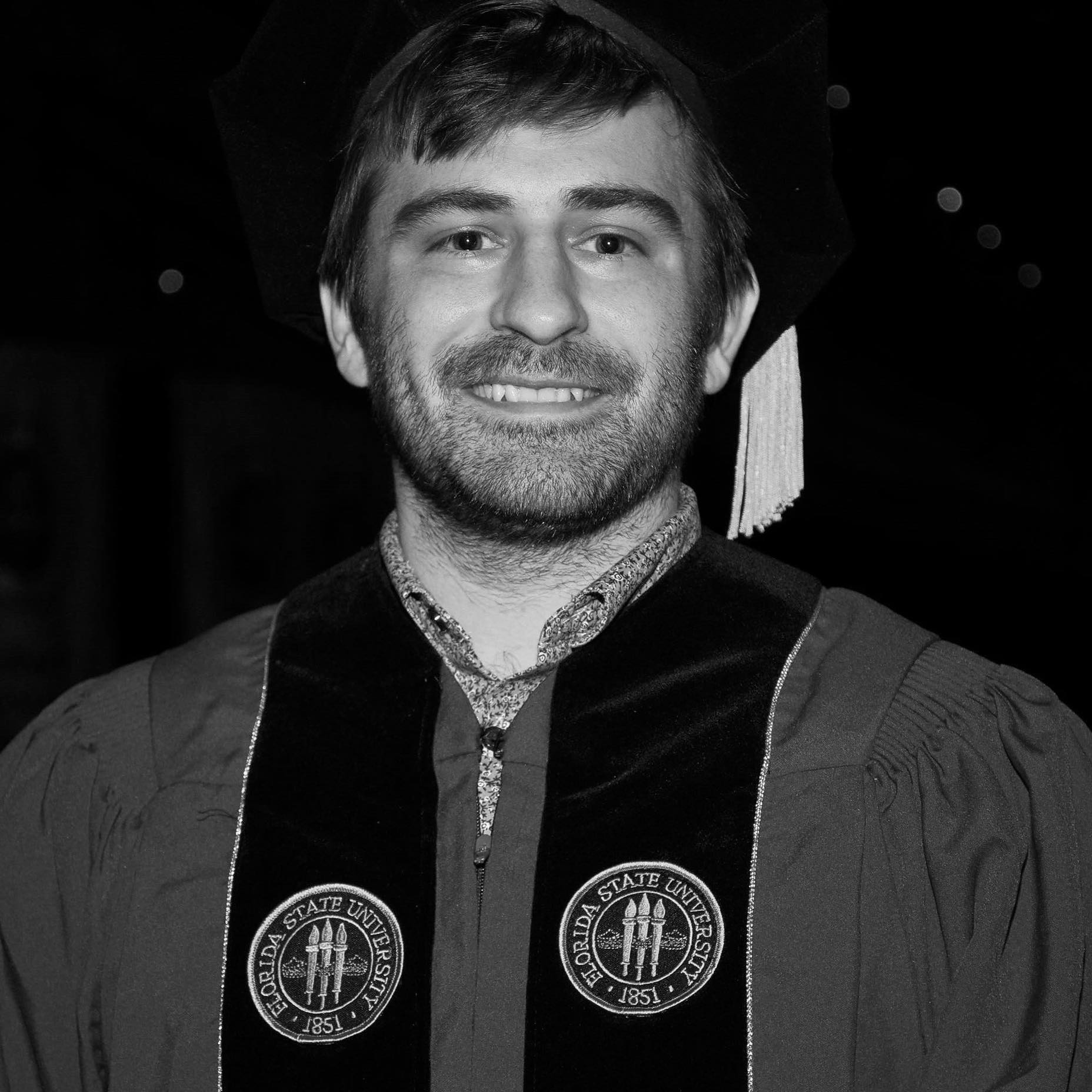
colin
  • Area: Clinical Psychology
  • Position: Postdoctoral Fellow
  • Institution: Medical University of South Carolina
01.

About Me

Research

Neural indicators of reward and depression

I didn’t grow up dreaming of being a scientist. Honestly, I didn’t even know what one was. My parents ran small sign businesses, and by the time I was a teenager, I was helping out—assembling vinyl and electric signs, crawling through attics to wire installations, handling invoices and paperwork. My world was practical, hands-on, and local.

At sixteen, I dual-enrollmed in a psychology course at my local college. One assignment asked us to research a mental illness using peer-reviewed sources. That was the first time I encountered a journal article. It felt like discovering a hidden world—one where people spent their lives trying to understand the human mind. I was captivated. I didn’t just want to read those articles—I wanted to write them. At the time, I was especially drawn to the question of why people engage in antisocial or harmful behavior.

I finished my AA at Indian River State College and applied to Florida State University with no real plan—just a vague understanding that if I wanted to get a PhD, I needed to get research experience.

Clinical Work

Trauma treatment

I joined my first lab in my second semester, spending nearly 20 hours a week running sessions for online internalizing treatments in Dr. Jesse Cougle’s lab. Drawn to criminal behavior, I later joined Dr. Christopher Patrick’s lab, running EEG sessions focused on psychopathy and externalizing disorders.

But the more I learned, the more I realized how much we don’t know. My curiosity shifted—from what causes behavior, to how we even define and measure these elusive psychological constructs. I became fascinated with measurement itself: how latent traits like depression or disinhibition manifest across self-report, brain responses, and task performance—and how those tools often disagree.

During my post-bacc years, I trained under Dr. Keanan Joyner in advanced quantitative methods, working on scale development and multi-modal assessment. I became especially interested in how time shapes what we observe—how repeated measures across days, trials, or contexts offer different insights into psychological phenomena.

Outreach

Reaching underserved communities

Today, my work revolves around three core aims:

1. Capturing dynamics at the trial level. I focus on breaking down averaged signals in cognitive tasks to examine trial-level fluctuations in performance and brain activity. I'm especially interested in the stability of a construct across time and trials, and have developed a method for estimating trial response consistency (tRC): a within-subject measure of variability that quantifies how reliable a metric is for an individual, on any given trial.

2. Understanding systematic measurement error. I’m investigating why daily symptom reports often diverge so dramatically from retrospective self-reports. How much of that gap is noise, and how much is telling us something meaningful about the limitations of our measurement tools?

3. Improving recruitment and data quality. I also study how we recruit and engage research participants. What draws people from different backgrounds to participate in our studies? What keeps them engaged? And what can we do to make participation feel more like collaboration than extraction?

02.

My Research

Updated March 27, 2025

0
Published
Published
Bowyer, C. B., Ribes-Guardiola, P., Joyner, K. J., & Patrick, C. J. (2025). Opposing relations of reward positivity with anhedonia and threat sensitivity: Implications for differential dimensional diagnosis. Clinical Psychological Science, 21677026241292049.
Bowyer, C. B., Brush, C. J., Patrick, C. J., & Hajcak, G. (2022). Effort and appetitive responding in depression: Examining deficits in motivational and consummatory stages of reward processing using the effort-doors task. Biological Psychiatry Global Open Science.
Yancey, J. R., Bowyer, C. B., Roberts, K. E., Jones, D. E., Foell, J., McGlade, E. C., Yurgelun-Todd, D. A., Boot, W. R., & Patrick, C. J. (2022). Boldness moderates cognitive performance under acute threat: Evidence from a task-switching paradigm involving cueing for shock. Journal of Experimental Psychology: Human Perception and Performance.
Bowyer, C. B., Brush, C. J., Threadgill, H., Harmon-Jones, E., Treadway, M., Patrick, C. J., Hajcak, G. (2021). The effort-doors task: Examining the temporal dynamics of effort-based reward processing using ERPs. NeuroImage, 228, 117656.
Bowyer, C. B., Joyner, K. J., Latzman, R. D., Venables, N. C., Foell, J., Patrick, C. J. (2020). A model-based strategy for interfacing trait domains of the DSM-5 AMPD with neurobiology. Journal of Personality Disorders.
Yancey, J. R., Bowyer, C. B., Foell, J., Boot, W. R., & Patrick, C. J. (2019). Boldness moderates the effects of external threat on performance within a task-switching paradigm. Journal of Experimental Psychology: Human Perception and Performance, 45(6), 758.
Joyner, K. J., Bowyer, C. B., Yancey, J. R., Venables, N. C., Foell, J., Worthy, D. A., ... & Patrick, C. J. (2019). Blunted reward sensitivity and trait disinhibition interact to predict substance use problems. Clinical Psychological Science, 7(5), 1109-1124.
Bowyer, C. B., Joyner, K. J., Yancey, J. R., Venables, N. C., Hajcak, G., & Patrick, C. J. (2019). Toward a neurobehavioral trait conceptualization of depression proneness. Psychophysiology, 56(7), e13367.
0
Conference Papers
Conference Papers
Yancey, J. R., Bowyer, C. B., Foell, J., Hultstrand, K. V., Patrick, C. J. (2016). Turning up the heat on cold cognition: Task switching under threat. Psychophysiology, 53 (S93-S93).
Brislin, S. J., Yancey, J. R., Drislane, L. D., Bowyer, C. B., Roche, N., Patrick, C. J. (2014). P3 amplitude shows differential relations with triarchic psychopathy facets. Psychophysiology, 51(S33-S33).
0
Posters
Posters
* Indicates mentored student under my primary supervision for project
Johnson, C. E., Bowyer, C. B., Jones, D. N., Pauley, A. C., Dewan, A. K., & Patrick, C. J. (October, 2023). Modulating emotional visual stimuli with salient odor cues: A novel approach to assessing face processing. Society for Psychophysiological Research (SPR) Annual Meeting, New Orleans, LA
Brown, J. S., Jones, D. N., Bowyer, C. B., Hammock, E. A. D., & Patrick, C. J. (October 2023). Alexithymia predicts increased P300 in cyberball social exclusion paradigm. Society for Psychophysiological Research (SPR) Annual Meeting, New Orleans, LA
Bowyer, C., Brush, C.J., Patrick, C. J., & Hajcak, G. (September 2022). Dissecting the Temporal Dynamics of Motivational and Consummatory Reward Processing Deficits in Depression. Society for Psychophysiological Research (SPR) Annual Meeting, Vancouver, B.C.
Patrick, C. J., Joiner, K. J., Bowyer, C. B., Latzman, R. D., Ribes-Guardiola, P. (September 2022). Distinct ERP Measures as Indicators of Broader Versus Narrower Dimensions of Psychopathology. Society for Psychophysiological Research (SPR Annual Meeting, Vancouver, B.C.
Bowyer, C., Foell, J., Venables, N., Strickland, C., Patrick, C. (September, 2019). A Strategy For Interfacing Trait Dimensions of The DSM-5 Alternative Model For Psychopathology (AMPD) With Neurobiology. Society for Psychophysiological Research (SPR) Annual Meeting, Washington D.C.
Yancey, J., Hultstrand, K., Bowyer C., Foell, J., Boot, W., Patrick, C. (September, 2019).  Dispositional Threat Sensitivity & Aversive Startle Potentiation Moderate Effects of Phasic Threat Cueing in a Task Switching Paradigm. Society for Psychophysiological Research (SPR) Annual Meeting, Washington D.C.
Bowyer C., Foti D., Brady N., Patrick C., Hajcak G. (September 2018). Reduced Anticipatory Reward Activity and Depression: Results From an ERP-MID Paradigm. Society for Psychophysiological Research (SPR) Annual Meeting, Quebec
Yancey J., Bowyer C., Palumbo I., Boot W., Patrick C.  (September 2018). Cognitive Flexibility Under Threat of Shock: Parsing Cognitive & Affective Sub-Processes Using Event Related Potentials. Society for Psychophysiological Research (SPR) Annual Meeting, Quebec
Hultstrand K., Yancey J., Bowyer C., Foell J., Patrick C. (September 2018). Task Switching Under Phasic Threat of Shock: Associations With Dispositional Threat Sensitivity and Potentiation of Startle. Society for Psychophysiological Research (SPR) Annual Meeting, Quebec
Bowyer C., Joyner K., Yancey J., Hajcak G., Patrick C., (September 2017)  A Neuroclinical Assessment of Trait Liability For Depression . Society for Psychophysiological Research (SPR) Annual Meeting, Vienna
Yancey J., Bowyer C., Hultstrand K., Boot W., Patrick C. ., (September 2017) Set Shifting and Threat of Shock Separately Modulate The Vertex Positive Potential to Faces During Task Switching . Society for Psychophysiological Research (SPR) Annual Meeting, Vienna
Patrick C., Bowyer C., Yancey J., Hultstrand K. , (September 2017).  Reduced Electrodermal Response to Aversive Picture Stimuli as an Indicator of Dispositional Threat Sensitivity. Society for Psychophysiological Research (SPR) Annual Meeting, Vienna
Perkins E., Brislin S., Yancey J., Bowyer C., Patrick C., (September 2016) Dissociating Disposition Traits Using Electrocortical Indicators: The Heads-and-Faces Oddball Task. Society for Psychophysiological Research (SPR) Annual Meeting, Minneapolis, MN.
Bowyer C., Palumbo I., Yancey J., Sowards S., Foell J., Patrick C., (September 2016). Enhanced Error Related Negativity Under Threat of Shock: Evidence from a Task-Switching Paradigm. Society for Psychophysiological Research (SPR) Annual Meeting, Minneapolis, MN.
Joyner K., Bowyer C., Yancey J., Hajcak G., Patrick C., (September 2016) Distinct Behavioral Performance correlates of the ERN and PE in the Flanker Task. Society for Psychophysiological Research (SPR) Annual Meeting, Minneapolis, MN.
Brislin S., Yancey J., Bowyer C., Patrick C.,(September 2016) Early ERP Responses to Emotional Faces: Category, Intensity, and Train Effects. Society for Psychophysiological Research (SPR) Annual Meeting, Minneapolis, MN.
Yancey J., Bowyer C., Foell J., Hultstrand K., Patrick C. (September 2016) Turning Up the Heat on Cold Cognition: Task-Switching Under Threat. Society for Psychophysiological Research (SPR) Annual Meeting, Minneapolis, MN.
Bowyer C., Venables N., Yancey J., Patrick C., Hajcak G., Worthy D. (September 2015) Distinct Brain Correlates of General Disinhibition Vs. Substance Abuse: Evidence from an ERP/Gambling Task Paradigm. Society for Psychophysiological Research (SPR) Annual Meeting, Seattle, WA.
Brislin S., Yancey J., Drislane L., Bowyer C., Roche N., Patrick C. (September 2014) P3 Amplitude Shows Differental Relations With Triarchic Psychopathy Facets. Society for Psychophysiological Research (SPR) Annual Meeting, Atlanta, GA.
Bowyer C., Katz R., Poli E., Yancey J., Patrick C. (September 2014) Dispositional Threat Sensitivity and Aversive Startle Potentiation: Moderating Impact of General Distress. Society for Psychophysiological Research (SPR) Annual Meeting, Atlanta, GA.
Bowyer C., Foell J., Patrick C. (July 2015) Facets of Psychopathy as Moderators of Cognitive Flexibility. Society for Scientific Study of Psychopathy (SSSP) Bi-annual Meeting, Chicago, IL.
Olson L., Yancey J., Flaisch T., Kirmse U., Bowyer C.,  Schupp H., Patrick C. (July 2015) Reduced LPP Brain Response During Serial Rapid Picture Processing Covaries with the Disinhibitory Facet of Psychopathy. Society for Scientific Study of Psychopathy (SSSP) Bi-annual Meeting, Chicago, IL.
03.

My Funding

0
Training Grants
Training Awards
National Institute of Mental Health T32 MH 018869
2024-2026
Basic and Translational Research Training in Traumatic Stress Across the Lifespan.
$120,000 over two years
National Institute of Mental Health T32 MH 093311-11
2022-2023
Examining Associations Between Inflammation and Depression at Distinct Temporal Substages of Reward Processing.
$36,862 over one year
0
Awards
Awards
MUSC Internship Consortium Laura Griffin Humanitarian Award
2024
04.

My Skills

Statistics & Data Processing
R
85%
SPSS
80%
MATLAB (EEGLAB/ERPLAB)
50%
Brain Vision Analyzer (BVA)
50%
Mplus
30%
Programming Languages
Javascript
50%
PHP
40%
CSS
85%
HTML
95%
Python
30%
Data Acquisition
Qualtrics
95%
Actiview
80%
Curry8
60%
PsychoPy
80%
E-Prime
40%
eeg-notebooks
25%
EEG Systems
BioSemi
90%
Neuroscan
85%
ActiChamp
25%
Other
ChatGPT
50%
Photoshop
50%
05.

My Research Positions

 Brain Stimuluation Laboratory 
 MEDICAL UNIVERSITY OF SOUTH CAROLINA 

Principal Investigator: Lisa McTeague, PhD

 Postdoctoral Fellow 
 August 2023 - Present 

General Duties

  • Secondary data analysis
  • Task design
Study examining the effect of ultrasound stimulation on memory performance

  • Programmed study tasks
  • Assisted in data collection

 CLINICAL NEUROSCIENCE LAB 
 FLORIDA STATE UNIVERSITY 

Principal Investigator: Christopher J. Patrick, PhD

 Graduate Research Assistant 
 August 2014 - August 2017 

 Lab Manager 
 May 2020 - May 2023 

General Duties

  • Hire, train, and supervise team of undergraduate research assistants collecting data on multiple protocols
  • Maintain supply inventory
  • Write detailed Standard Operating Procedure documents for study protocols for undergraduate research assistants
  • Process EEG data using MATLAB and Brain Vision Analyzer (BVA)
  • Troubleshoot lab equipment (e.g., shock box, button box, head boxes) and data collection software (e.g., Curry8, E-Prime)
  • Clean, document, and organize study data
Electroencephalography (EEG) study investigating reward and emotion processing, olfactometry, and biological factors

  • Assist in task design and creation of counterbalanced run orders
  • Built automated recruitment system
  • Programmed and piloted study tasks
  • Carried out recruitment of community and student sample
  • Managed Facebook advertisements
  • Wrote initial IRB application and assisted in revisions
Electroeceophalography (EEG) study investigating the relationship between oxytocin, social rejection, and callous-unemotional traits

  • Centrifuge and aliquot blood samples
  • Oversaw the design and testing of new study tasks built in PsychoPy
Electroeceophalography (EEG) study investigated neural, behavioral, and self-reported correlates of optimal performace under threat

  • Recruited study participants
  • Maintained detailed records of expenditures
Online study investigating factors related psychopathy and mental health

  • Oversee and manage study enrollment through SONA

 COUGLE LAB 
 FLORIDA STATE UNIVERSITY 

Principal Investigator: Jesse Cougle, PhD

 Lab Manager 
 May 2020 - April 2021 

General Duties

  • Monitored online data collection progress and answered participant questions
  • Recreated lab website utilizing open-source template and custom code
  • Created curriculum for undergraduate research assistants to keep them engaged with the lab and provide consistent research-related learning opportunities despite all lab operations being remote
  • Cleaned, scored, and merged self-report data from multi-timepoint assessments
  • Created automated workflows for screening, recruitment, and participant scheduling

 Undergraduate Research Assistant 
 May 2018 - April 2020 

General Duties

  • Data collection
Randomized controlled trial for social anxiety

  • Created automated workflow that utilized participant responses on a baseline assessment to customize display on daily behavior checklist assessments
  • Created automated workflow that assigned participant to treatment group at baseline and automatically scheduled and sent links to group-specific interventions and assessments via text message
Randomized controlled trial for clinically-significant anger

  • Revised IRB materials to adapt in-person protocol for remote data collection in response to pandemic-related campus closures
  • Created automated workflow that assigned participant to treatment group at baseline and automatically scheduled and sent links to group-specific interventions and assessments via text message
  • Created detailed tracking documents to monitor participant compliance
Randomized controlled trial for depression, examinng the effects of reducing social media use

  • Revised IRB materials to adapt in-person protocol for remote data collection in response to pandemic-related campus closures
  • Created automated workflow that assigned participant to treatment group at baseline and automatically scheduled and sent links to group-specific interventions and assessments via text message
  • Created detailed tracking documents to monitor participant compliance
Online study investigating factors related to clinically-significant appearance-related concerns

  • Oversaw and managed study enrollment through SONA
Randomized controlled trial testing intervention for clinically-significant lonliness

  • Scored online community screeners and sent out recruitment emails to those who met eligibility for the study
  • Scheduled emails with links to online study interventions and future assessments
  • Posted recruitment advertisements on Craigslist and other websites
  • Performed data entry tracking participant completion of study interventions and assessments
Study investigating factors related to broad mental health diagnoses

  • Explained study procedures, answered participant questions, obtained informed consent, and debriefed participants according to protocol
  • Interviewed participants using materials adapted from the MINI
Randomized controlled trial for appearance-related concerns treatment

  • Explained study procedures, answered participant questions, obtained informed consent, and debriefed participants according to protocol
  • Administered SCID-5 module for Body Dysmorphic Disorder
  • Administered MINI modules for Social Anxiety Disorder, Anorexia Nervosa, and Bulimia Nervosa
  • Administered behavioral task measuring anxiety-related factors
  • Scheduled follow-up lab visits and dates for participants to take at-home assessments
06.

Teaching

 Behavioral Activation for Depression Study 
 October 2022 | PI: Greg Hajcak, PhD 

Automatic screening, group assignment, and individualized daily assessments that were customized based on participant responses on baseline questionnaire in Qualtrics. Automatic group-based text messages with personalized links to assessments using SlickText.

 Exposure-Based Intervention for Perfection Study 
 August 2022 | PIs: Sarah Redden, MS & Jesse Cougle, PhD 

Automatic screening, group assignment, and individualized daily assessments that were customized based on participant responses on baseline questionnaire in Qualtrics. Automatic group-based text messages with personalized links to assessments using SlickText.

 Social Anxiety Treatment Study 
 Janaury 2022 | PIs: Nora Mueller, MS & Jesse Cougle, PhD 

Automatic screening, group assignment, and individualized daily assessments that were customized based on participant responses on baseline questionnaire in Qualtrics. Automatic group-based text messages with personalized links to assessments using SlickText.

 The Basics of EEG Data Collection, Processing and Analysis 
 University of California, Berkeley Department of Psychology 
April 2025

07.

My Other Positions

 Assitant to the Director of Clinical Training 
 PSYCHOLOGY DEPARTMENT | FLORIDA STATE UNIVERSITY 
 August 2022 - Present 

  • Collate laws, rules, and regulations from all states and territories related to licensure as a clinical psychologist to determine if the clinical program meets education requirements
  • Collect and organize field placement data for the clinical program
  • Organize and disseminate resources on applying for internship to graduate students in the clinical program
  • Collected and prepared data for the APA’s Annual Report Online (ARO)

 Project Manager 
 DIVERSITY PROJECT | FLORIDA STATE UNIVERSITY 
 August 2022 - March 2023 

  • Hired, trained, and supervised research assistants to code variables from application materials (i.e., curriculum vitae, personal statements, transcripts) to psychology graduate programs at Florida State University
  • Managed, cleaned, and merged data in preparation for analyses
08.

Infrastructure Projects

The administration of complex research protocols can be made easier with automated processes. I build webapps that integrate with things like Google Drive and Qualtrics to simplify data collection.

Text-message based ecological momentary assessment (EMA) studies that use Qualtrics for data collection have no native solution for tracking the number of surveys completed. This is a time-consuming problem for researchers who are monitoring participant compliance over the assessment period.

Using GoogleAppscript, I have created a method to track participant responses in Qualtrics. The webapp sends this compliance information back to Qualtrics which can then be used to:

  • Restrict participants to only complete the assigned assessment one time.
  • Display compliance/incentives earned to participants at the beginning of their survey.
Text-message based ecological momentary assessment (EMA) studies that use Qualtrics for data collection have no native solution for personalizing fine-grain restrictions on the time and date a participant completes a survey. This poses challenges for researchers using Qualtrics for EMA data collection, especially who recruit participants on a rolling basis - as due dates for each participant will be different. This is further complicated by timezone changes for national studies.

Using Qualtrics features, I have created a system to assign response date/time windows based on a participant's time zone and the date they complete their enrollment. For example, a researcher could specify that a participant will take a survey for the next 7 days between 9am and 9pm. If the participant opens the survey at the wrong time or the wrong day, they will receive an error message.

Typical sliding scale quantities can be useful for a variety of things, but are best when the typical quantities a participant is reporting on is known. For drug researchers, especially those researching cannabis or other drugs with multiple routes of administration, coming up with a standardized measurement that allows for everyone can be challenging.

In Qualtrics, I have developed a way to collect information about people's typical quantification (e.g., typically take 3 puffs of a cannabis vape pen) and apply that to a sliding scale - allowing participants to respond to the question proportional to their typical use. Moving the slider results in scaling the numeric value of their custom response.

While Qualtrics has built in solutions to assign random codes to participants, there is no native solution to assign a code from a pre-generated list of codes. This is challenging for researchers who need to integrate accross multiple platforms or assign pre-purchased gift card codes for payment.

Using Google Appscript, I have developed a method to assign external codes to participants, ensuring that the same code is never given out twice. This has a wide variety of possible applications.

It's not uncommon for participants to attempt to sign up for studies twice - either purposely or on accident. While Qualtrics has some native solutions to check for duplicate responses, there is currently no native solution to check if someone has signed up using the same email address or phone number.

Using Google Appscript, I created a solution that checks for duplicate entries using the same identifying information and prevents the participant from progressing through the survey if they had previously completed it.

Sometimes researchers need to mail study materials to their participants - but a free response text field is a researcher's worst nightmare for getting accurate information.

Using freely available API, I developed an address validator that can be integrated into Qualtrics surveys to ensure that the address a participant provides is both real and in the proper format.

While Qualtrics contains some native support for limiting the number of surveys that are completed, it does not have a way to limit that based on the number of survey initiated and currently active.

Using Google Appscript, I created a way to track the number of surveys initiated, still in progress and within the allowed time period, and completed.

09.
© CRAN Studies 2026 / All rights reserved.